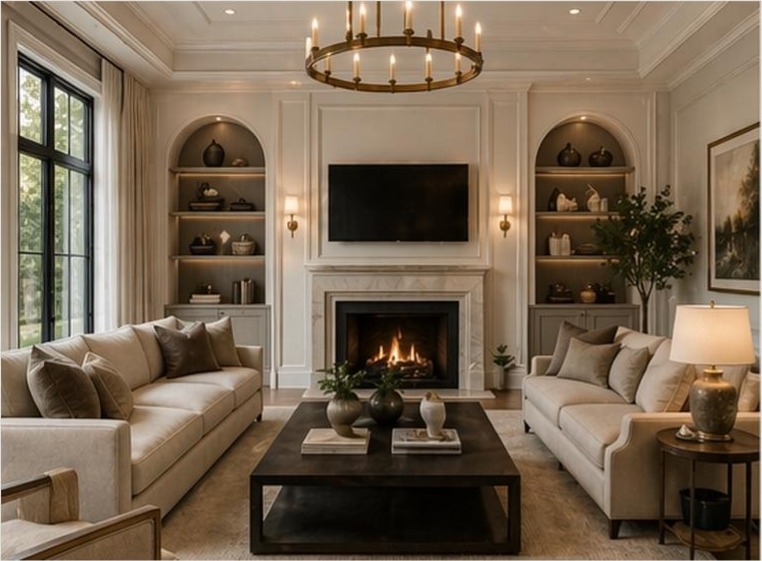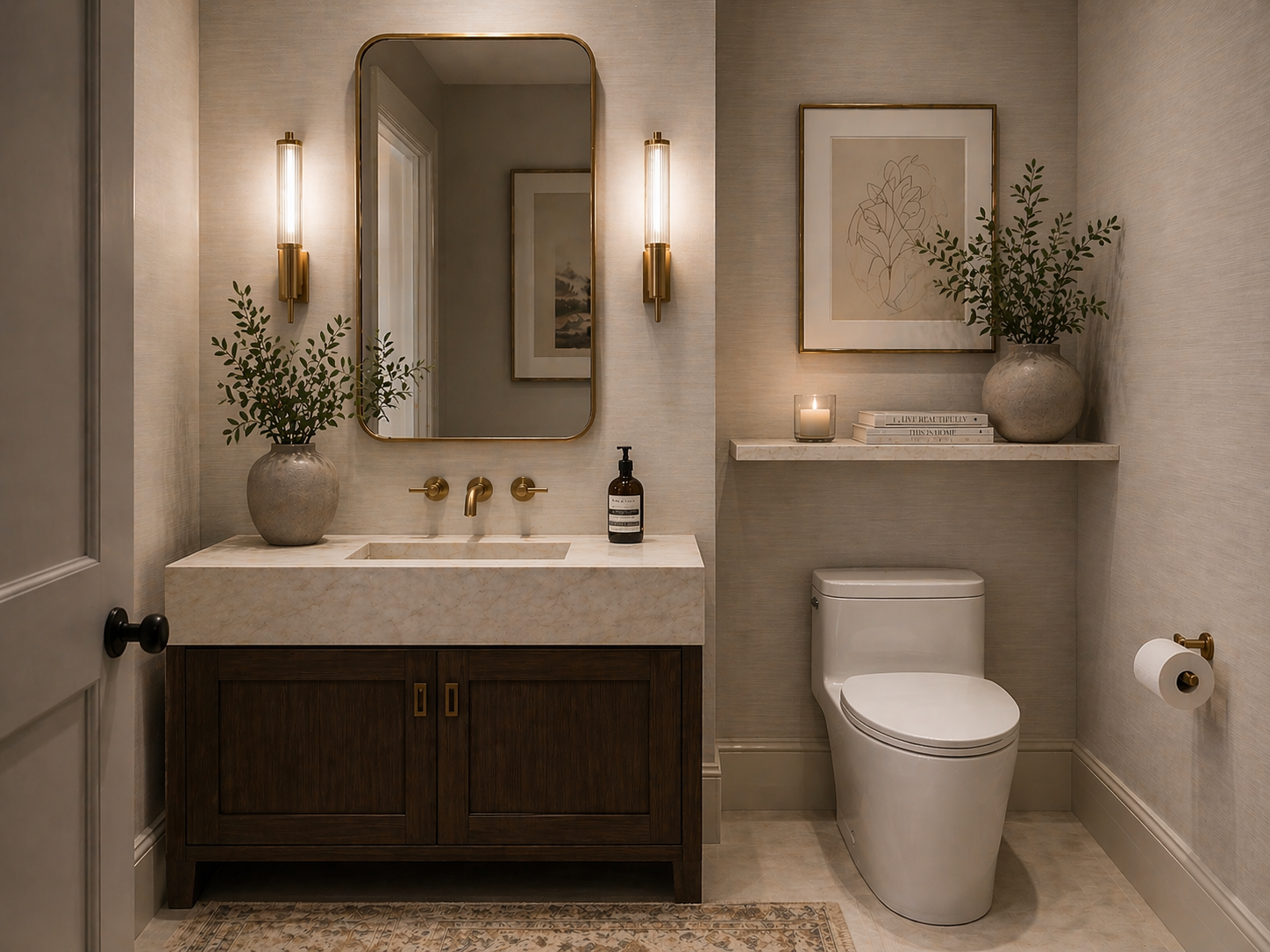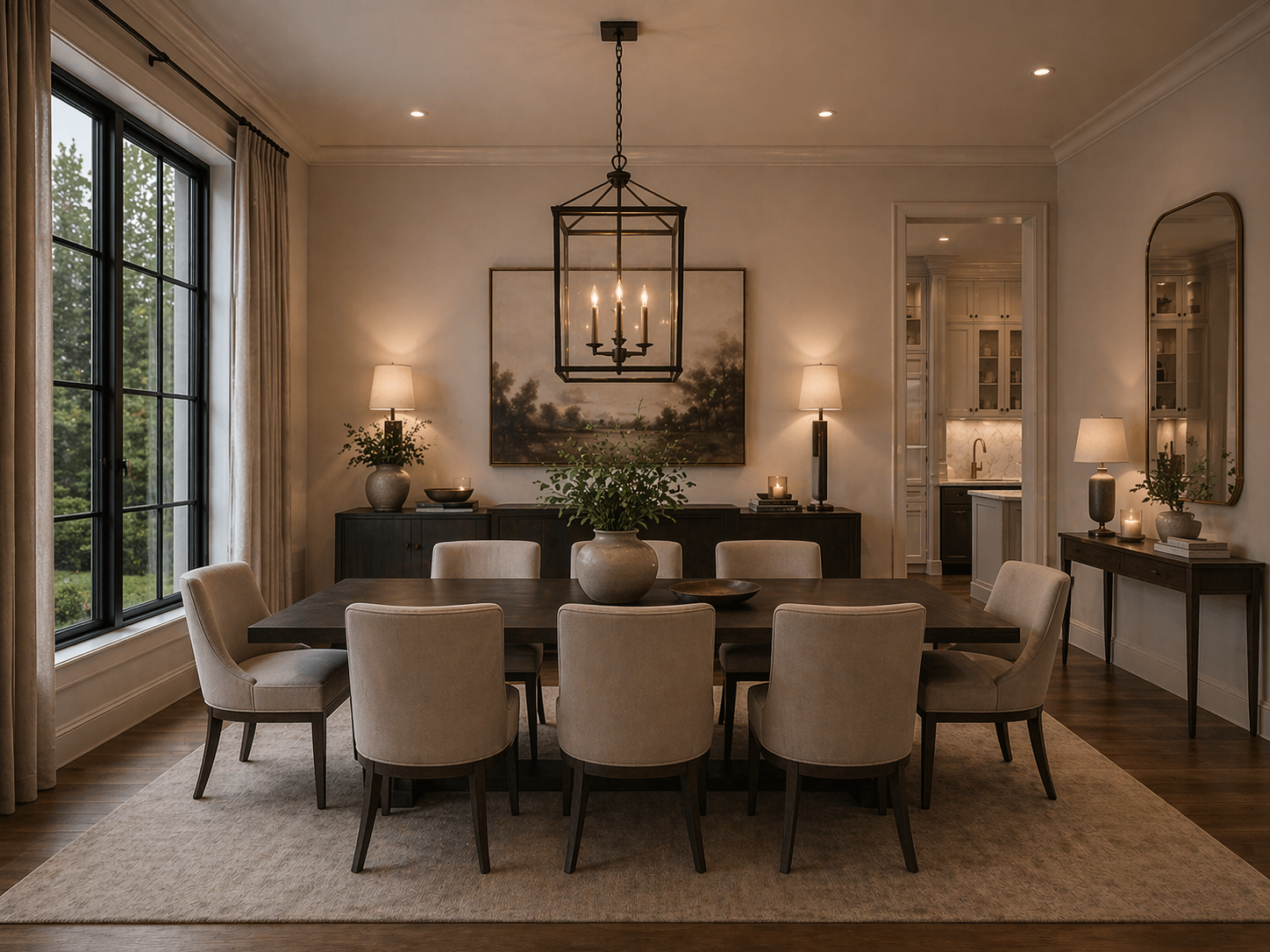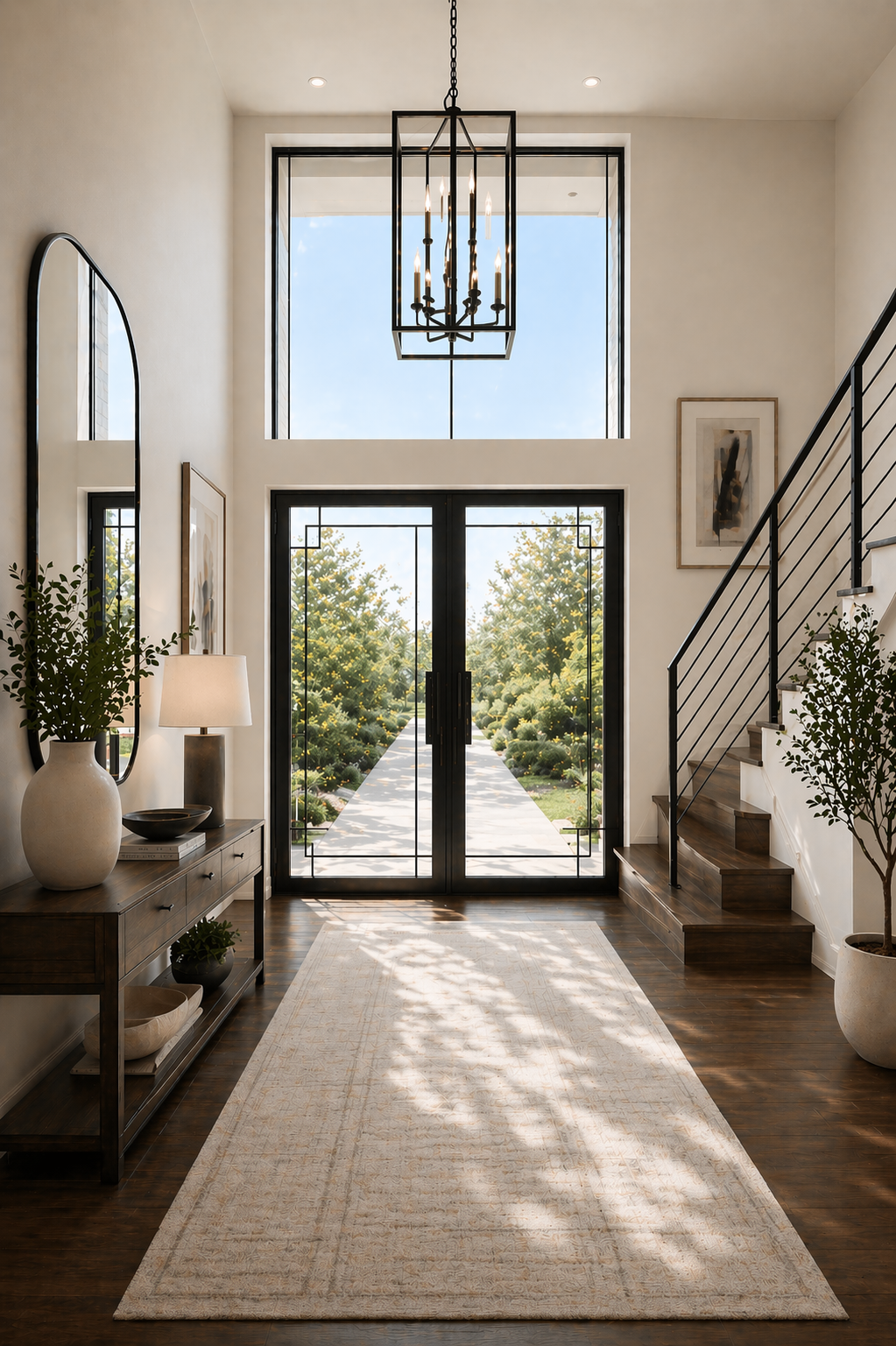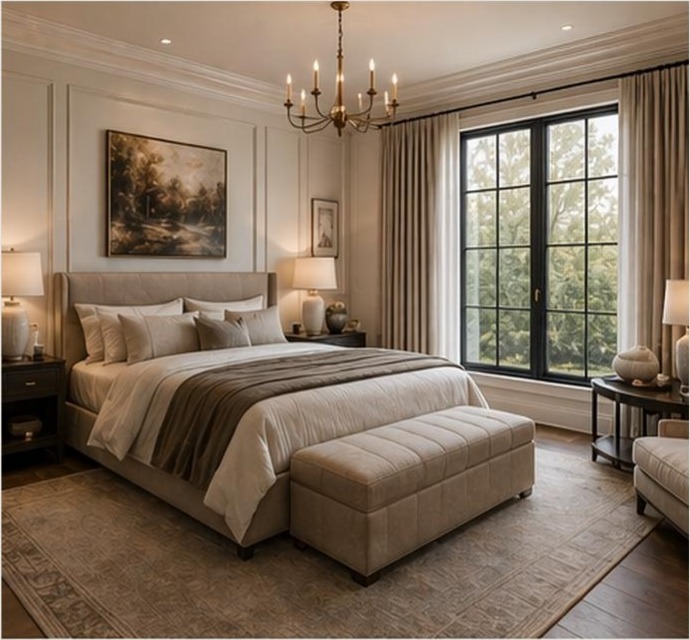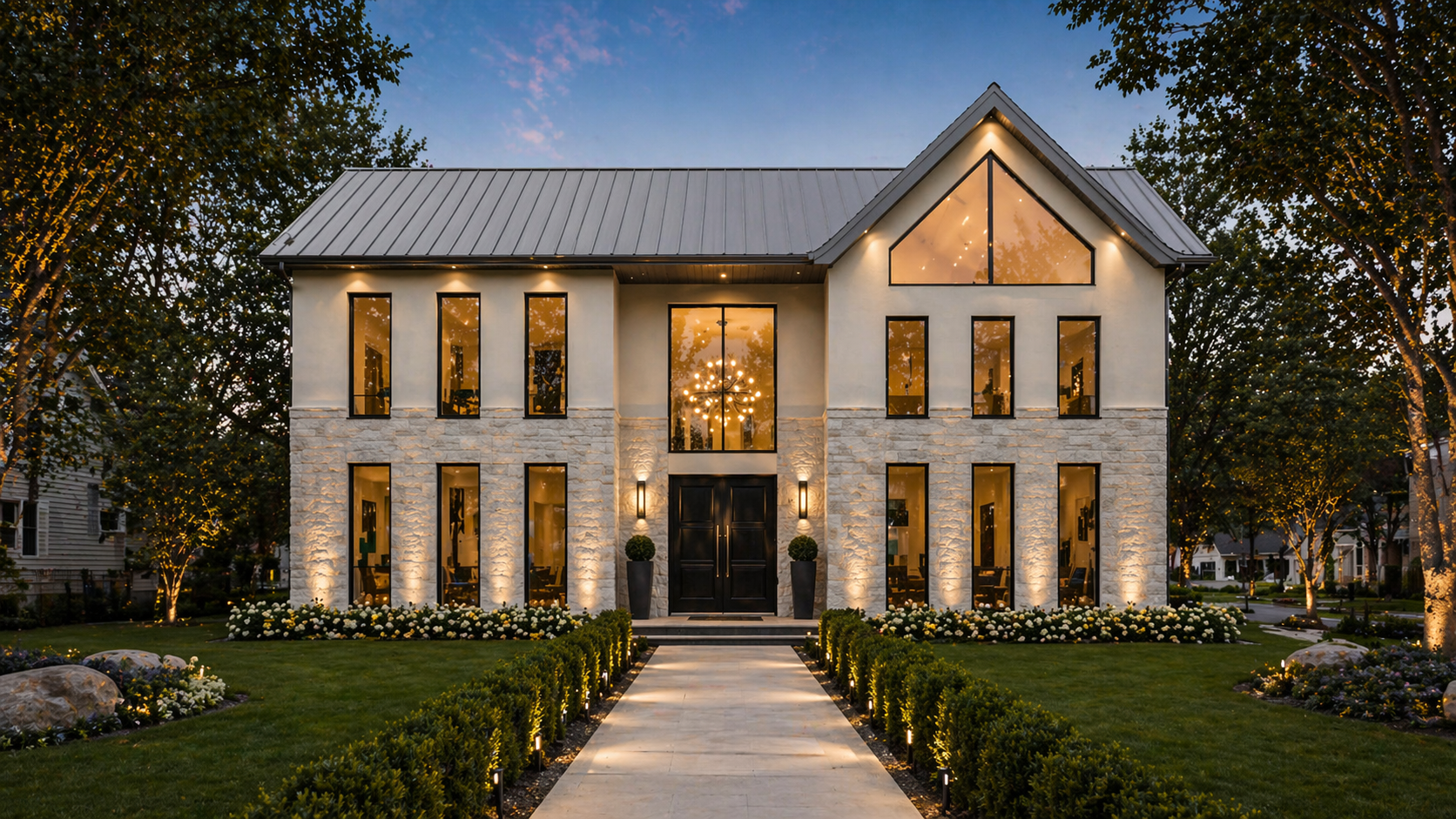
The façade is formal, symmetrical, and centered. Inside, we keep that discipline but soften it — warm tone, tailored furniture, tactile materials, and layered light.
The result should feel elegant without feeling stiff, luxurious without feeling staged. Between minimalism and Restoration Hardware, but cleaner, more edited, and more sophisticated — a house that photographs beautifully and lives well every day.
The market has moved past cold minimalism and copy-paste quiet luxury. The right direction for this house is layered, livable luxury — warmer woods, natural stone, handmade tile, and a little personality so the home feels collected rather than staged.


The exterior sets the tone — strong symmetry, formal massing, a centered entry, and clean steel glazing. Inside, the design should respect that discipline without becoming stiff or overly traditional. The move is a warm modern classic: restrained paneling, quiet walls, honed stone, wide-plank oak, aged brass, and upholstery that reads soft rather than heavy.
This places the home in the sweet spot between minimalism and Restoration Hardware — the calm and clarity of minimalism, with added warmth, texture, and comfort; the elegance of RH, without the bulk, repetition, or showroom feel. Designed, not decorated. Timeless, elevated, easy to live in.
The architecture wants balance, proportion, and restraint. This direction gives it softness and depth without sacrificing formality.
Architecture first. Materials with soul. Rooms that market beautifully and still live well every day of the year.
Cold grays, shiny finishes, heavy over-scaled furniture, and decorative detail that feels forced or overly ornate.
Flow, scale, and light set the shared experience of the home. Shared rooms should photograph beautifully, read as custom, and feel aspirational and livable at once.

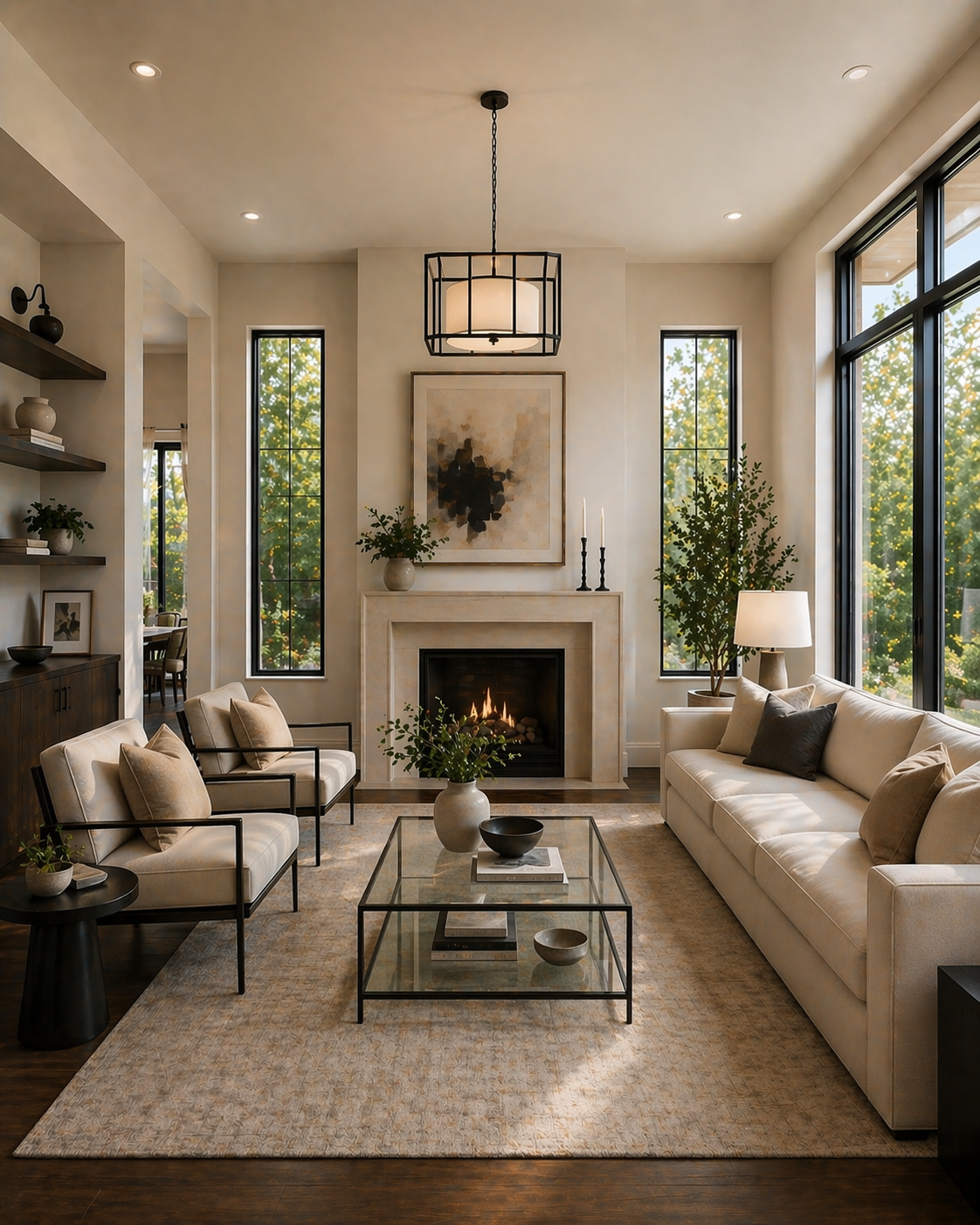
Anchor the room with a centered fireplace wall, quiet panel molding, concealed technology, and warm built-ins that feel integrated rather than decorative. Furniture stays tailored and comfortable — soft upholstery, a darker wood table, and subtle curves to take the edge off the architecture.

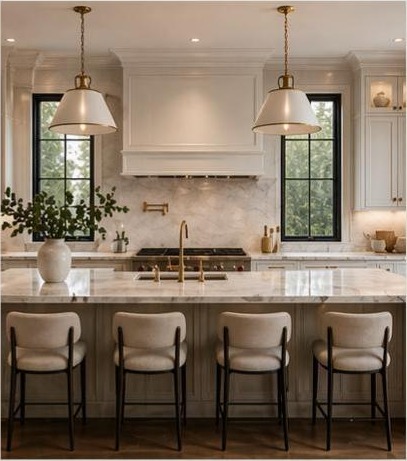
Creamy custom cabinetry, honed marble or quartzite, warm brass hardware, and an island that feels substantial but sharper and lighter than RH. The hood reads architectural and simple; pendants add warmth without pulling it traditional.
The kitchen and family room are not two spaces — they're one experience. Families spend close to eighty-five percent of their time at home between these two rooms: cooking, working, eating, watching, hosting, drifting in and out of each other's days. Every detail of the plan should honor that.
Sightlines should run cleanly from island to fireplace. The ceiling language should carry across both zones so nothing feels divided. Finishes — flooring tone, cabinetry color, stone selection, lighting temperature — stay in the same family so the eye reads one continuous room, even when the activities inside it shift. A home planned this way photographs beautifully and, more importantly, lives beautifully.
The private side of the home should feel quiet, elevated, and restorative — hotel-like, but softened. Fewer pieces, better pieces, and an emphasis on calm light.

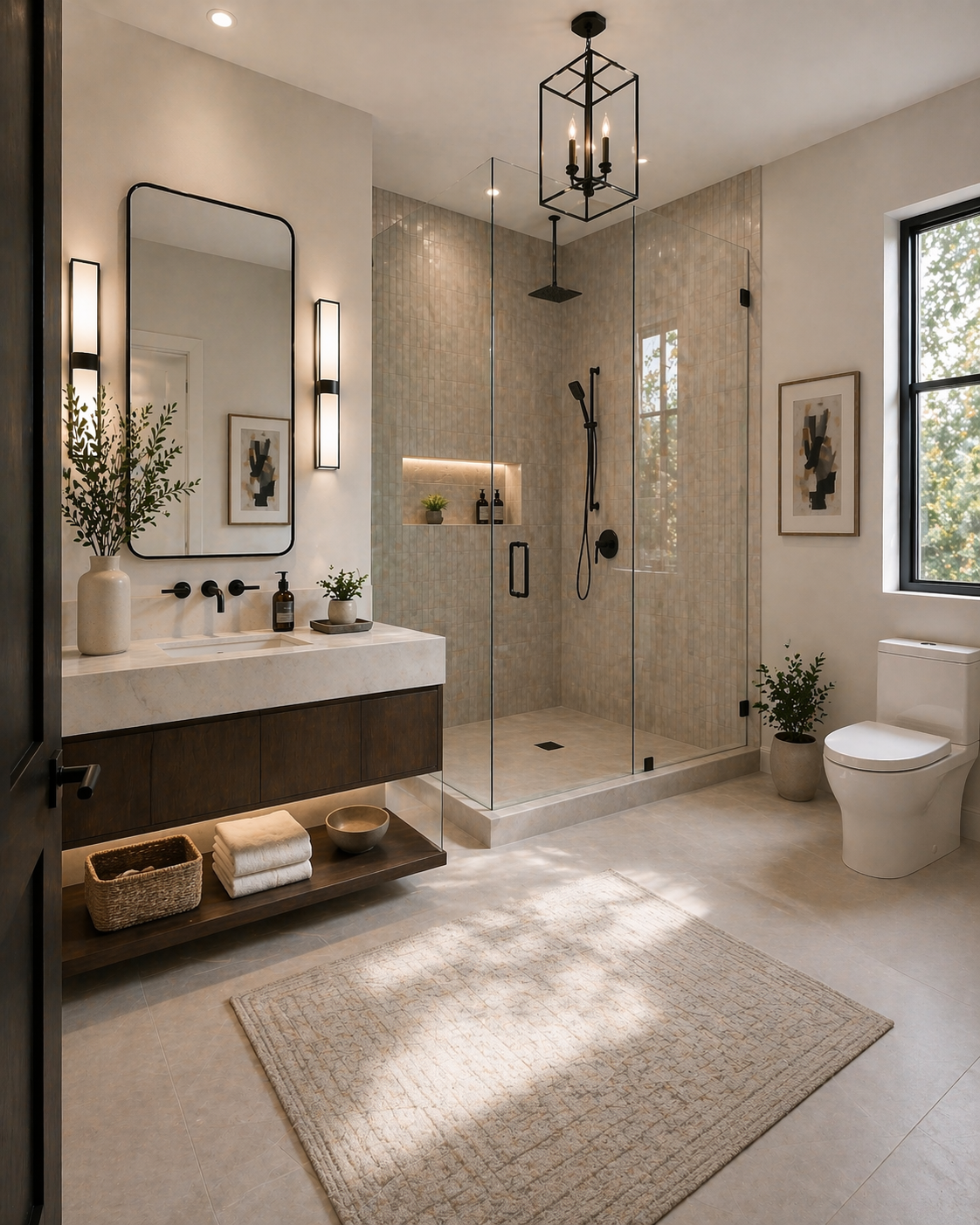
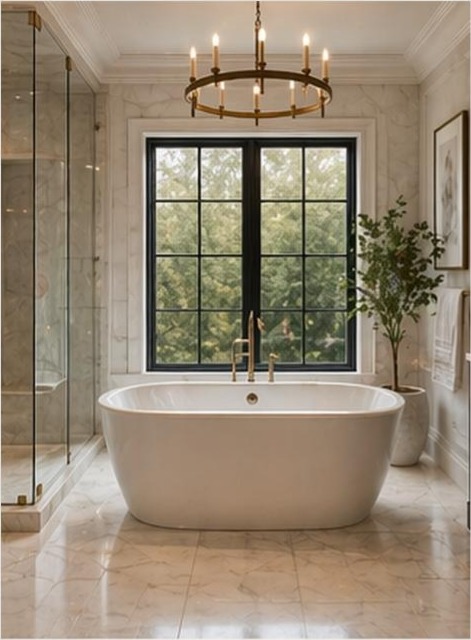
Bright, serene, and hotel-like. Honed stone, a sculptural tub, warmer metal fixtures, and darker vanity wood for depth. Calm and substantial — never cold or overly glossy.

Quiet, elevated, private. Tall drapery, upholstered forms, soft art, warm wood, and restrained styling. Comfort matters — but the room still reads crisp, tailored, and intentional.
The public side of the house belongs to everyone. The primary suite belongs to you. It is the one place in the home where life slows down — the first room of your morning, the last room of your night, the one you return to after everything the day throws at you.
That's why it's designed differently. Not as another bedroom-and-bath, but as a private apartment within the house — calmer materials, softer light, tighter detail, and a clearer sense of retreat the moment you walk in.
Think hotel-suite hush with the warmth of a well-kept home. Every surface quietly resolved: linen that falls correctly, a tub placed so it catches the right morning light, hardware that feels right in the hand, lighting that dims the way you actually live.
Done well, the primary suite is also the strongest resale moment in the house. Buyers walk through kitchens and living rooms with their heads. They walk through the primary suite with their imagination — and that is the room that closes the deal.
The value here is continuity. One team shapes the concept, pressure-tests it against budget and livability, then carries it into execution. The house stays cohesive, the selections stay disciplined, and the end result is more valuable.
Define the architectural language, palette, room mood, and overall point of view.
Select stone, cabinetry finishes, flooring tone, hardware, and the key textures.
Resolve room-by-room details so the house feels custom — not pieced together.
Align intent with budget, sequencing, lead times, and real-world build decisions.
Execute with consistency so the finished home looks like the concept — not a diluted version of it.
Below are the next five moves — each one tightens the work and brings the home closer to the version you'll actually live in.
Sign off on the overall tone, palette, and room-by-room mood before specification work begins.
Narrow the finish set — stone, cabinetry tone, flooring, hardware, plumbing, tile.
Resolve cabinetry, paneling, trim, lighting, and built-in decisions room by room.
Price the full scope, value-engineer where needed, and lock long-lead items.
Move into full documentation, procurement, and execution on site.